
ENERGY-SAVING SOLUTIONS
NIKOS-CENTER: Insulation Works
We provide thermal insulation services for various-purpose tanks, pipelines, and equipment
- Thermal insulation of pipelines and containers with basalt and mineral wool, protected by a protective shell
- Thermal insulation of pipelines and containers based on polyurethane foam with a protective shell
- Thermal insulation of pipelines and containers based on styrofoam with a protective shell
- Thermal insulation with elastic polymer composites
GOAL
What is this
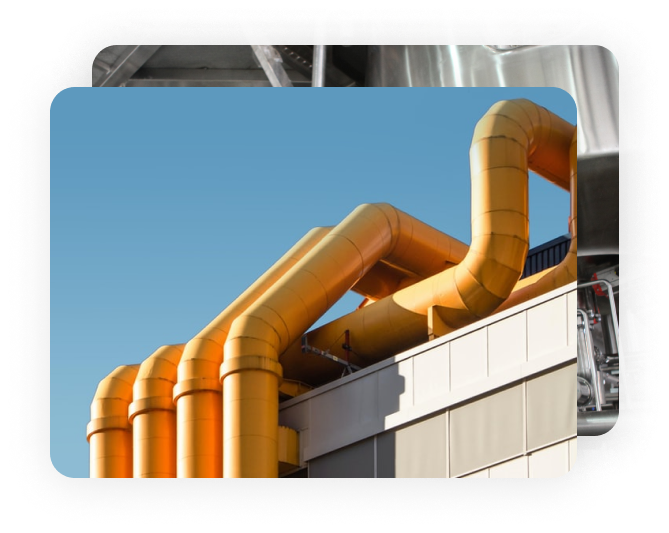
Insulation of pipelines is one of the most important aspects of energy conservation in the modern world. Reducing heat losses through the use of thermal insulation materials for pipes has become a primary means of energy and resource savings. Pipe insulation systems are essential everywhere, from small suburban houses to large enterprises and factories. By incorporating pipe insulation into the construction project, significant savings can be achieved on heating and network repairs
IN DETAIL
Types of insulation works we provide
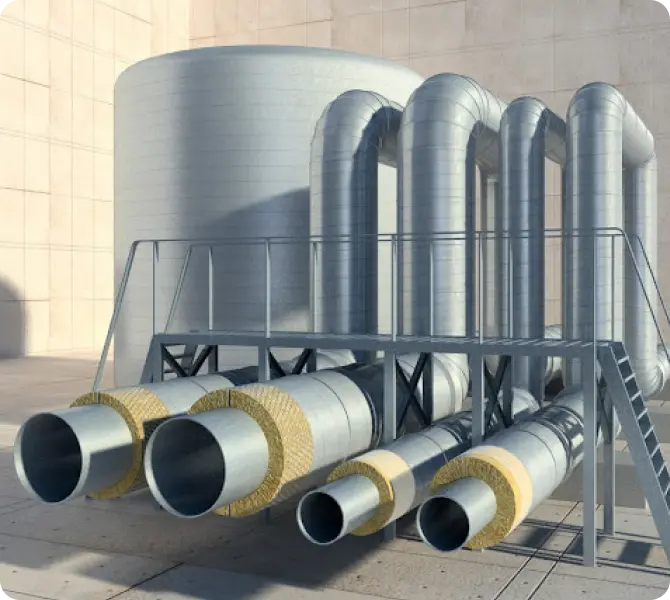
Thermal insulation of pipelines and containers with basalt and mineral wool, with a protective shell
Basalt wool stands out with its quality and high performance characteristics. The material has a porous structure, yet its fibers are arranged chaotically. Thanks to this, basalt insulation exhibits low thermal conductivity and provides excellent thermal insulation
The material exhibits moisture resistance. Water droplets that come into contact with it are unable to alter its structure and properties, which sets it apart from other fibrous insulators. Thanks to its unique qualities, it can be used in baths or saunas
Despite its density, basalt insulation exhibits excellent vapor permeability. Due to this property, it allows moisture to pass through and does not create condensation, enabling comfortable humidity and air temperature conditions in the room
The material exhibits moisture resistance. Water droplets that come into contact with it are unable to alter its structure and properties, which sets it apart from other fibrous insulators. Thanks to its unique qualities, it can be used in baths or saunas
Despite its density, basalt insulation exhibits excellent vapor permeability. Due to this property, it allows moisture to pass through and does not create condensation, enabling comfortable humidity and air temperature conditions in the room
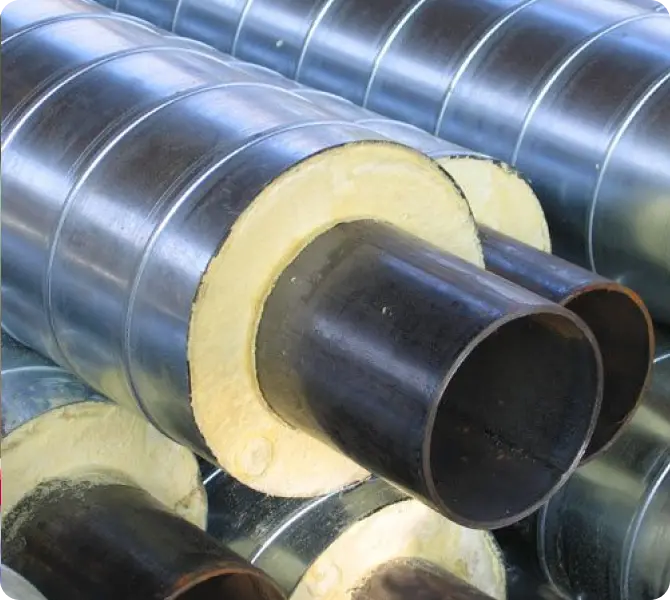
Thermal insulation of pipelines and containers based on polyurethane foam with a protective shell
Expanding polyurethane foam insulation takes on any shape and effectively fills volumes of any complexity. Surface treatment with foam creates a continuous, lightweight, and warm insulation layer without gaps, joints, or cold bridges from attachments
Polyurethane foam can be used in a temperature range from -200°C to +200°C
The foamed lightweight material is easy to transport and install, adding very little complexity to constructions. It can work in soil and humid conditions. Additionally, rigid Polyurethane foam does not absorb or conduct water, making it an excellent waterproofing material. It is resistant to decay and inert to most acids, alkalis, and salts
Polyurethane foam can be used in a temperature range from -200°C to +200°C
The foamed lightweight material is easy to transport and install, adding very little complexity to constructions. It can work in soil and humid conditions. Additionally, rigid Polyurethane foam does not absorb or conduct water, making it an excellent waterproofing material. It is resistant to decay and inert to most acids, alkalis, and salts
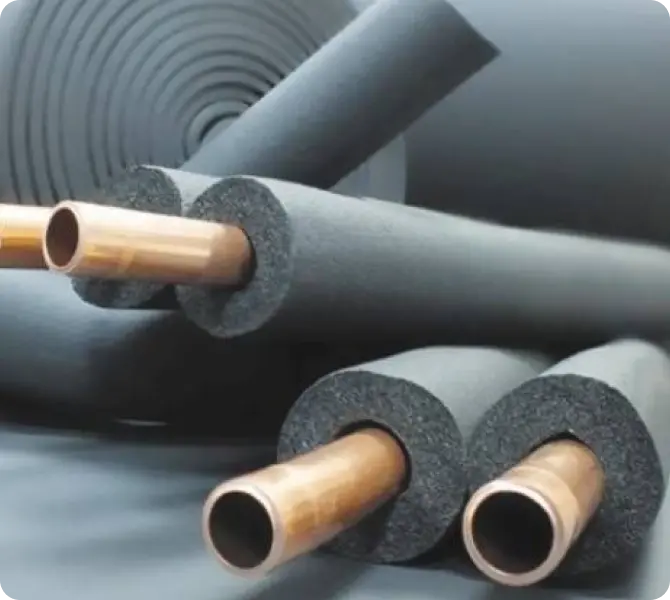
Thermal insulation of pipelines and containers based on styrofoam with a protective shell
Compared to the common counterpart made of mineral wool, sheet polystyrene foam insulation has a lower weight, thermal conductivity coefficient, higher density, and mechanical strength
Due to its structure, it can be easily processed, and any shape can be achieved with a simple knife. Its low weight facilitates easy attachment to vertical surfaces, reducing additional load on supporting structures and the foundation
A submerged sheet of expanded plastic polymer absorbs up to 4% of moisture, after which the absorption process stops. Its low hygroscopicity prevents freezing and damage due to low temperatures during winter
Due to its structure, it can be easily processed, and any shape can be achieved with a simple knife. Its low weight facilitates easy attachment to vertical surfaces, reducing additional load on supporting structures and the foundation
A submerged sheet of expanded plastic polymer absorbs up to 4% of moisture, after which the absorption process stops. Its low hygroscopicity prevents freezing and damage due to low temperatures during winter
CONTACTS AND COMMUNICATION
Contact us
Leave a request - we will advise you on all the questions that have arisen.
Contacts: